
Important Note: As of May 2026, Polycystic Ovary Syndrome or PCOS has been renamed Polyendocrine Metabolic Ovarian Syndrome or PMOS following a global consensus study published in The Lancet. This article uses PMOS throughout to reflect the updated terminology.
The new name recognizes that the condition is not primarily a gynecological disorder, but a complex, multisystem condition involving endocrine, metabolic, reproductive, dermatological, and psychological health.
This article is also meant to be a source of valuable information for the reader; however, it is not a substitute for direct expert assistance. Seek help from a medical professional for further information.
It is undeniable that women’s health has not been a priority to the medical community up until recently. It’s no wonder that a lot of illnesses and conditions can go undiagnosed or sometimes even worse, misdiagnosed. One of the diagnoses that have become highlighted in recent years, and one we should all be aware of, is Polyendocrine Metabolic Ovarian Syndrome or PMOS.
What is PMOS?
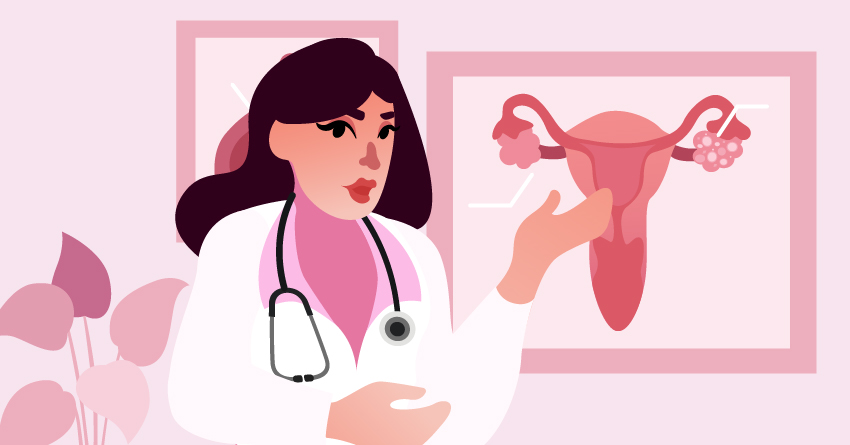
Polyendocrine Metabolic Ovarian Syndrome or PMOS is a condition where the ovaries produce abnormal amounts of the male sex hormone, androgen, that are usually present in small amounts in women. The hormonal imbalance can cause a problem in the ovaries. The ovaries create the egg that is released monthly as part of a regular menstrual cycle. In those who have PMOS, the egg may not develop the way it was meant to or it may not be released during the ovulation period as it should.
While the name ‘polycystic ovary syndrome’ suggests numerous small cysts that form in the ovaries, many women with this disorder do not have cysts while other women without the disorder do.
PMOS affects 7-10% of women of childbearing age and is the most common cause of infertility.
What are the Common Symptoms of PMOS?
PMOS is the most common hormonal disorder among women of reproductive ages and yet, may do not know they have it. Here are a few signs to look out for.
1Irregular periods

Periods that are infrequent, irregular, or prolonged are some of the most common signs of PMOS. Abnormally heavy periods, extended amount of time between your cycles (meaning more than 35 days), or even bleeding for more than a week are all examples of an irregular period.
 Sold Out



2Polycystic ovaries
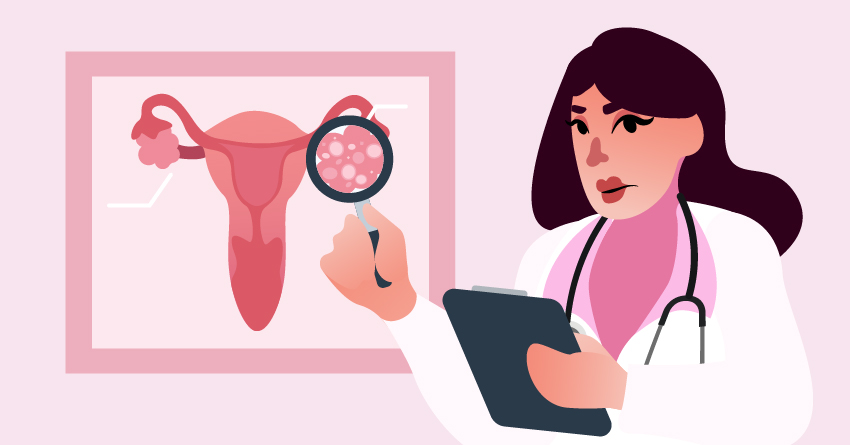
If you get a check-up with your medical professional and they find cysts in your ovaries, that may be a sign that you have PMOS. But as we have mentioned earlier, the presence of cysts in your ovaries may not affect your health at all. But since you’ll have consulted with a doctor to have found out about those cysts, they’re sure to tell you if they should be of any concern.
3Pelvic pain

For those with PMOS who do so happen to have cysts in their ovaries, pelvic pain can be an occurrence. For some, it is a constant pain, and for others, it is a dull ache or a sharp jolt that comes and goes.
4Darkened skin

Some women who suffer from PMOS can develop a resistance to insulin that can cause acanthosis nigricans. This is the darkening of the skin around the collar, underarm areas, or even your thighs to a black or purplish velvet texture.
5Skin tags

A curious symptom of PMOS is skin growth – specifically skin tags. Skin tags are small, skin-colored growths on the surface of the epidermis. They spontaneously erupt on different areas of the body. These tags commonly cluster around the neck and under the arms.
6Mood changes
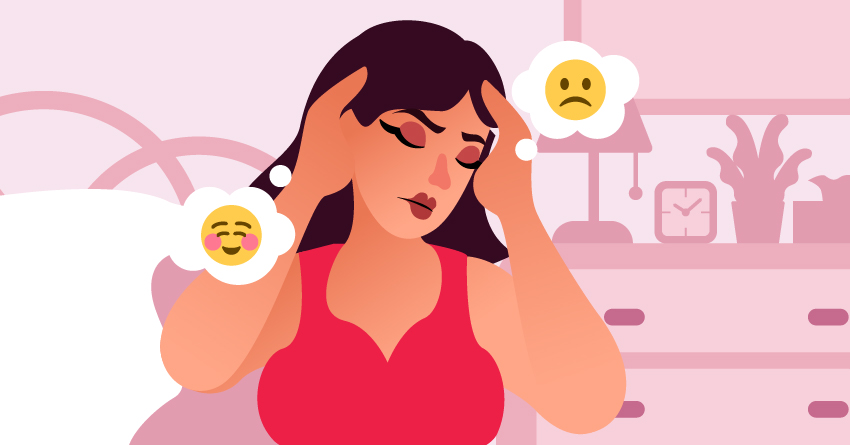
Because of the link between mind and body, it is no wonder PMOS can cause mood swings and emotional instability. Even depression and anxiety can stem from the imbalances of PMOS. There are times when eating disorders can occur, as well.
7Weight gain around your middle

The most common hormonal problem for women with PMOS is the chaos that encourages belly fat weight gain. Especially in the lower abdomen. This may be caused by the insulin resistance that occurs where the pancreas will produce more insulin than average to maintain normal blood sugar levels.
8Acne
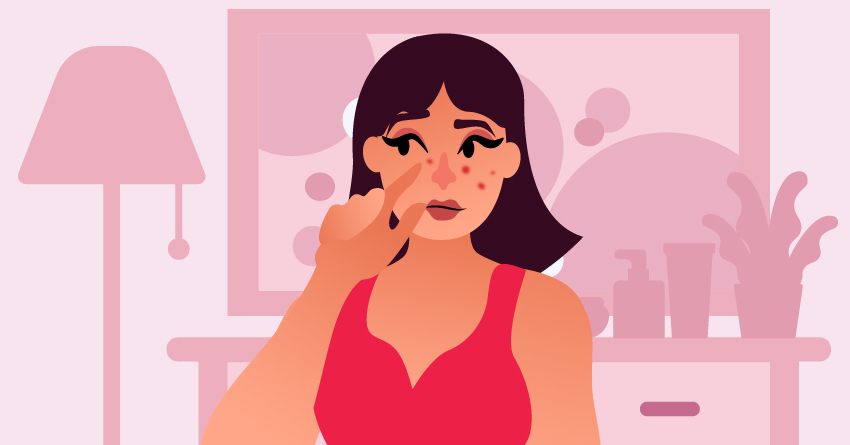
PMOS can create an excess of testosterone production. This can result in an increase in sebum and skin cell production which in turn, can result in acne. While acne is perfectly normal for those going through puberty, adult acne can be a different beast altogether.
9Too much hair where men usually have hair

The medical term for the condition in women where an excess growth of coarse, dark hair in a male-like pattern occurs is Hirsutism. This comes with the hormone imbalance that causes an overproduction of male hormones called androgens, and even more specifically: testosterone.
10Thinning hair on the scalp

Opposite to the overproduction of hair, PMOS can also cause thinning and hair loss. This female pattern hair loss is also known as androgenic alopecia.
What Causes PMOS?
There are a few factors that have been pinpointed as causes.
1Excess insulin

Insulin is a big contributor to PMOS. Many people with this condition have insulin resistance which means difficulty in the body’s absorption of insulin. This causes a build-up of insulin in the body which may cause higher androgen levels.


2Obesity

Obesity and weight can play a role in the body’s insulin production, and as mentioned earlier, insulin levels affect hormone production. So, obesity may result in an increase in androgen levels.
3Excess androgen
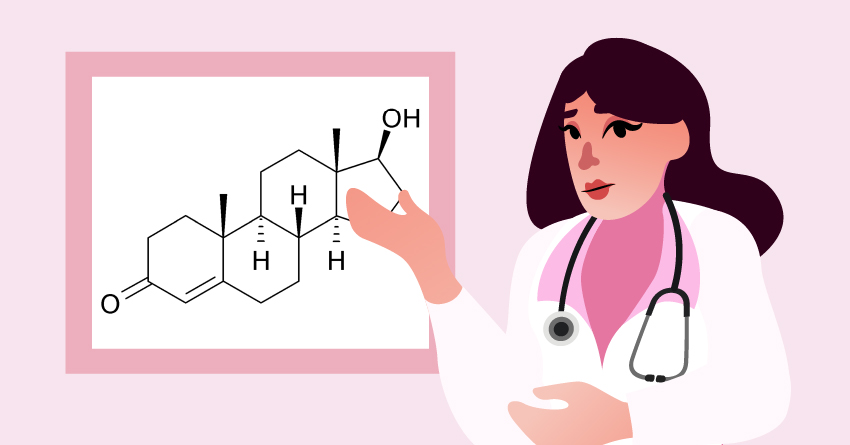
As evidenced by the previous two common causes, an excess in androgen is the most common cause of PMOS. Hyperandrogenism is caused by the disruption of ovarian or adrenal function that can result in the excessive production of androgens.
4Low-grade inflammation

It has been shown that women who have PMOS have a low-grade inflammation that can stimulate polycystic ovaries to produce androgens that can lead to heart and blood vessel complications.
5Heredity

Research has suggested that certain genes may be linked to PMOS. In a study conducted at the University of Alabama at Birmingham, the researchers found that 24% of women with polycystic ovary syndrome had a mother with PMOS and 32% of the women had a sister with the condition.


 Only 2 left

 Hot
Hot
How To Diagnose PMOS?
There is no test that definitively diagnoses PMOS. Have honest conversations with your doctor about weight changes, menstrual periods, and any other experiences that you or they feel significant.
1Pelvic Exam

The doctor examines your reproductive organs visually or manually. They’re looking for masses, growth, or other abnormalities that may be causes for concern. Things like an enlarged clitoris may be among the things that your doctor finds that can signal enlarged or swollen ovaries.
2Ultrasound
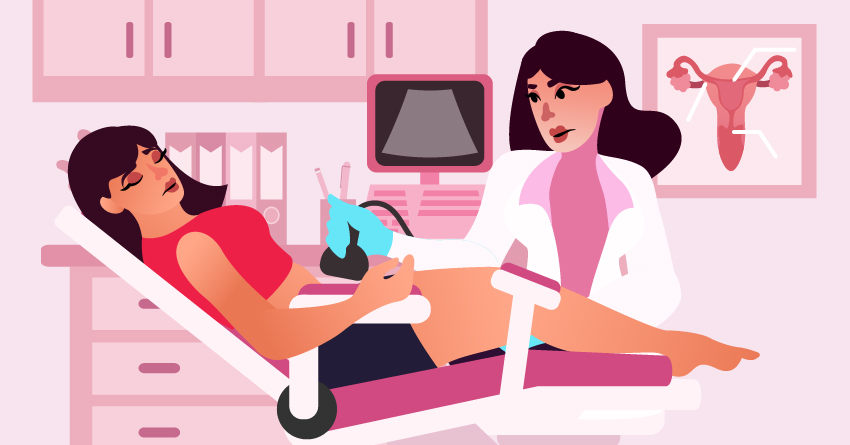
Your doctor checks the appearance of your ovaries and the thickness of the lining of your uterus. A wand-like device called a transducer is inserted into your vagina – this is a transvaginal ultrasound. The transducer then emits sound waves that become images on a computer screen.
3Physical Exam
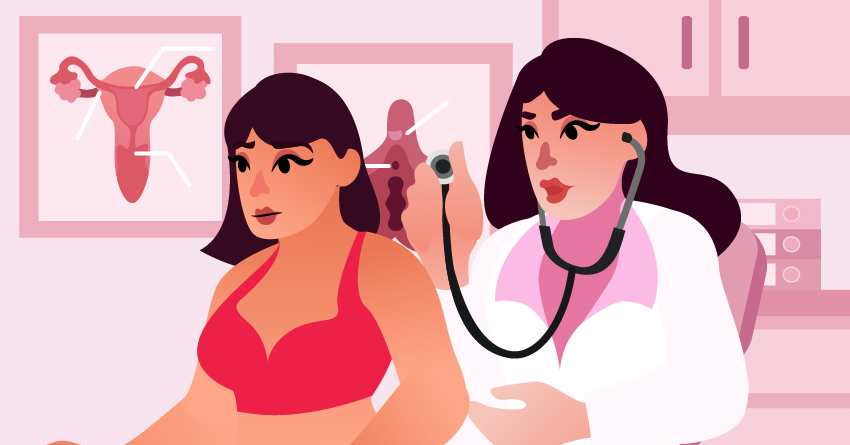
A physical exam includes checking for signs of excess hair growth, insulin resistance, and acne. A combination of these physical expressions of PMOS may result in further testing that can give a definitive diagnosis and more accurate treatments.
4Blood tests

Testing your blood checks your androgen hormone levels. Your medical professional will also keep an eye out for other hormones that are related to more common health problems that can sometimes be mistaken for PMOS like thyroid disease. Your doctor may also choose to test your cholesterol levels and check for diabetes.
What are the Complications of PMOS?
1Infertility

Cysts in the ovaries can make ovulation difficult. Ovulation is when your ovaries release an egg each month. You can’t get pregnant if a healthy egg isn’t available to be fertilized by a sperm. However, pregnancy is still possible for those with PMOS. Taking medicine and working with a fertility specialist may just be necessary to make the pregnancy possible.
2Gestational diabetes or pregnancy-induced high blood pressure

Now you’re pregnant with PMOS, your condition may still cause a few risks. Gestational diabetes – a form of diabetes that is formed during pregnancy, as well as pregnancy-induced high blood pressure are amongst the issues that increase in possibility.



3Miscarriage or premature birth

While miscarriages and premature births occur whether or not you have PMOS, there are three more times the likelihood of it occurring in pregnant individuals with PMOS. Miscarriages occur because of the high levels of testosterone. The insulin resistance can also affect the lining of your uterus.
4Nonalcoholic steatohepatitis
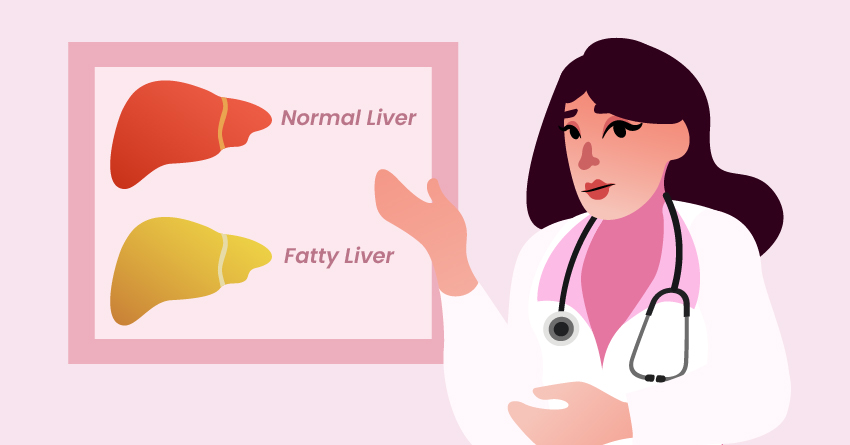
This condition is also known as nonalcoholic fatty liver disease. It’s characterized by severe liver inflammation caused by fat accumulation in the liver. A fatty liver is usually caused by heavy alcohol use. However, in those with PMOS, nonalcoholic steatohepatitis has become prevalent and is one of the most common endocrinopathies (a disease of the endocrine gland). It has been studied that insulin resistance and androgen excess are contributing factors to its development.
5Metabolic syndrome

This is a group of symptoms that include high blood pressure, high blood sugar, and abnormal cholesterol or triglyceride levels. All these factors can raise the risk of cardiovascular disease. People with PMOS are up to 11 times more likely to have metabolic syndrome than those without PMOS. Your weight, which can be affected by PMOS, can also increase the chances of having metabolic syndrome.
6Type 2 diabetes or prediabetes

Type 2 diabetes is when the body has difficulty regulating and using glucose as fuel. Meanwhile, prediabetes is appropriately named. It is a serious health condition where your blood sugar levels are at above-average levels, but not quite high enough to be diagnosed as type 2 diabetes. The insulin resistance that is associated with PMOS increases the chances for both of these. While prediabetes is reversible, type 2 diabetes can only be controlled and in some cases, go into remission.
7Sleep apnea

Sleep apnea is a serious sleeping condition in which breathing repeatedly stops and starts. A lot of the time this is caused by excess weight and obesity. Women with PMOS are twice as likely to develop sleep apnea, regardless of their weight. Obesity is a common risk factor for those with PMOS and sleep apnea.




8Depression and anxiety

Those who suffer from PMOS are more likely to experience mental disorders like anxiety and depression. While it could be due to hormone imbalances, it may also be due to a combination of factors that are still unclear.
9Eating disorders

It has become evident in recent years that eating disorders, specifically those that concern binge-eating, is overrepresented in individuals with PMOS. It has become a dilemma in treating PMOS patients since weight management, diet, and exercise are all part of treatment plans and these may all exacerbate or trigger eating disorders.
10Abnormal uterine bleeding
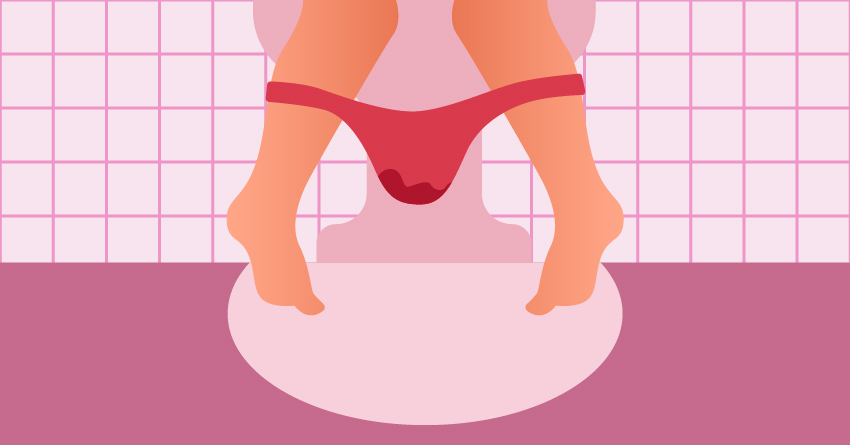
This is bleeding from the uterus that is longer than usual or that occurs at irregular times. Lighter or heavier than usual bleeding, or even spotting between periods can be considered abnormal uterine bleeding.
11Cancer of the uterine lining
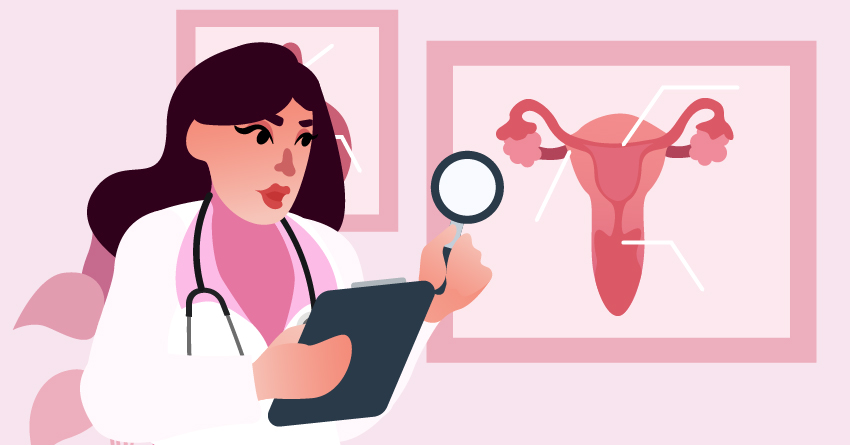
The increased levels of androgen and estrogen, combined with the lower levels of progesterone increase the risk of cancer of the uterine lining, also known as endometrial cancer. Endometrial cancer is a type of cancer that begins in the uterus whose symptoms also include unusual vaginal bleeding and pain in the pelvis.




How is PMOS commonly treated?

There are a few ways to treat PMOS, and oftentimes treatments are combined to address how PMOS affects specific individuals. While you should not (and probably could not) diagnose and treat PMOS yourself, it’s good to know a few of the common treatments.
1Lifestyle changes
For those who are overweight, the symptoms and overall risk of developing health problems from PMOS may be greatly improved with lifestyle changes that can help them lose weight. Even a 5% weight loss makes a significate difference in the effects of PMOS. Regular exercise and a healthy, balanced diet can help ease the problems PMOS may bring about.
2Contraceptive Pill
For those who have irregular or absent periods and do not wish to conceive, a contraceptive pill may be recommended to induce regular periods. An intermittent course of progestogen tablets is also an option. These medications can help reduce the long-term risk of endometrial cancer that can come from not having regular periods.
Another hormonal method of contraception called an intrauterine system (IUS) can also reduce this risk by keeping the womb lining thin without causing periods.
3Fertility Treatments
There will be those with PMOS who want to get pregnant, and that is possible for most as long as they undergo treatment.
The majority can take a short course of tablets at the top of each cycle for a couple of cycles and be, what they call, successfully treated. However, if this proves ineffective, there are other fertility treatments available.
- Clomifene is a medicine that is usually the first course of treatment for those with PMOS who are hoping to get pregnant. If that proves ineffective, metformin may be the next recommendation.
- Metformin is often used to treat type 2 diabetes (a common complication with PMOS). It can help stimulate ovulation, encourage monthly periods, lower the risk of miscarriage, while also lowering insulin and blood sugar levels in women with PMOS. Long-term benefits like lowering high cholesterol levels and reducing the risk of heart disease are also offered by metformin.
- Letrozole can also be used to stimulate ovulation in place of clomifene. It has also been used to treat breast cancer. Its use as a fertility treatment is “off-label” which means that the medicine’s manufacturer has not applied for a license for it to be used as PMOS treatment.
If oral medication has not helped, a medicine called gonadotrophins can be injected to help but may result in overstimulation of the ovaries and can result in multiple pregnancies. IVF treatments are a valid option, though the risk of multiple pregnancy (rarely more than twins) is also increased.
4Surgery
Laparoscopic ovarian drilling (LOD) may be a treatment for fertility options associated with PMOS. It is a minor surgical procedure done under general anesthetic as your doctor creates a small incision in your lower tummy where they pass a long, thin microscope (a laparoscope) through your abdomen.
The ovaries are then surgically treated using a laser or heat. They’re used to destroy the tissue that is producing the androgens. LOD has been found to lower testosterone levels, as well as the luteinising hormone, and raise the levels of follicle-stimulating hormones, thus correcting your hormone imbalance, restoring the normal function of your ovaries.
5Unwanted hair growth and hair loss treatments
Medications that help control hirsutism (excessive hair growth) and alopecia (hair loss) can be part of your PMOS treatment if it is a need that has to be addressed. They can include combined oral contraceptive tablets, cyproterone acetate, spironolactone, flutamide, and finasteride. These work by blocking the effect of male hormones like testosterone.
Topical treatments like eflornithine, a cream, can be used to slow the growth of unwanted facial hair. It does not remove the hair, nor does it cure unwanted facial hair, but you may wish to use it alongside your hair removal products. The topical treatment can take 4-8 weeks for you to see improvements.
Other hair removal methods like plucking, shaving, waxing, or even laser removal are all viable options.



Frequently Asked Questions

As you’ve reached the end of this guide, we hope that you’ve learned a lot from this condition. As for our readers who still have lingering questions about this condition, we’ve answered some of the frequently asked questions about PMOS.
1Can I live a normal life with PMOS?
Due to the metabolic, hormonal, and psychosocial issues caused by PMOS, there may be a few challenges that you’ll have to navigate when living with this condition. However, this doesn’t mean you can’t live a normal and quality life. What you can do is make healthier lifestyle changes and avail the needed treatments. We also recommend reaching out to your loved ones, support group, or a mental health professional if needed.
2Can PMOS affect my chances of getting pregnant?
As this condition interferes with your ovulation, it’s possible to have difficulty getting pregnant. Fortunately, hormonal imbalance from PMOS is treatable. Consult your healthcare provider to find the right medication for you.
3What happens if PMOS is left unmanaged?
If you don’t take the necessary medications and lifestyle changes for this condition, the symptoms will continue, and your long-term health will be compromised. PMOS has been associated with type 2 diabetes, infertility, cardiovascular disease, sleep apnea, depression, and other alarming conditions.
4What can I do to lose weight because of PMOS?
Your diet is the first thing you should change if you want to lose weight. Make sure to add vegetables high in fiber, lean protein, and anti-inflammatory foods and spices. As for foods to avoid, limit your intake of snacks and meals high in refined carbohydrates. Steer away from sugary and inflammatory foods, too. Every meal should be in moderation and avoid using food as a coping mechanism. Along with a healthy diet, exercising can also help lose the extra pounds.
5Is PMOS life-threatening?
PMOS is not a fatal condition, but if left unmanaged, it may cause life-threatening diseases, such as cardiovascular problems, endometrial cancer, liver inflammation, and type 2 diabetes. This is why if you have the symptoms above, consult with your healthcare provider as soon as possible.
Takeaway
PMOS can seem like an intimidating condition to deal with, but it’s manageable with proper treatment. Seeking help from a medical professional early, and as soon as you have any concerns can help prevent long-term health problems. While PMOS isn’t curable, and there is still a lot for the medical field to learn about it, getting checked can help give them a better idea of this condition as a whole. Work with your medical practitioner to find treatments that work best for you.
Don’t be too hard on yourself or your doctor when complications arise because you both need to communicate openly about your health and mental state when treating this condition as it not only affects you physically, it affects you mentally too. These conversations give those in the medical field more information and in turn, helps not only you but also the future generations of ovary-owners. Take care of yourself and advocate for your own health, and look for doctors that listen to and respect your concerns.